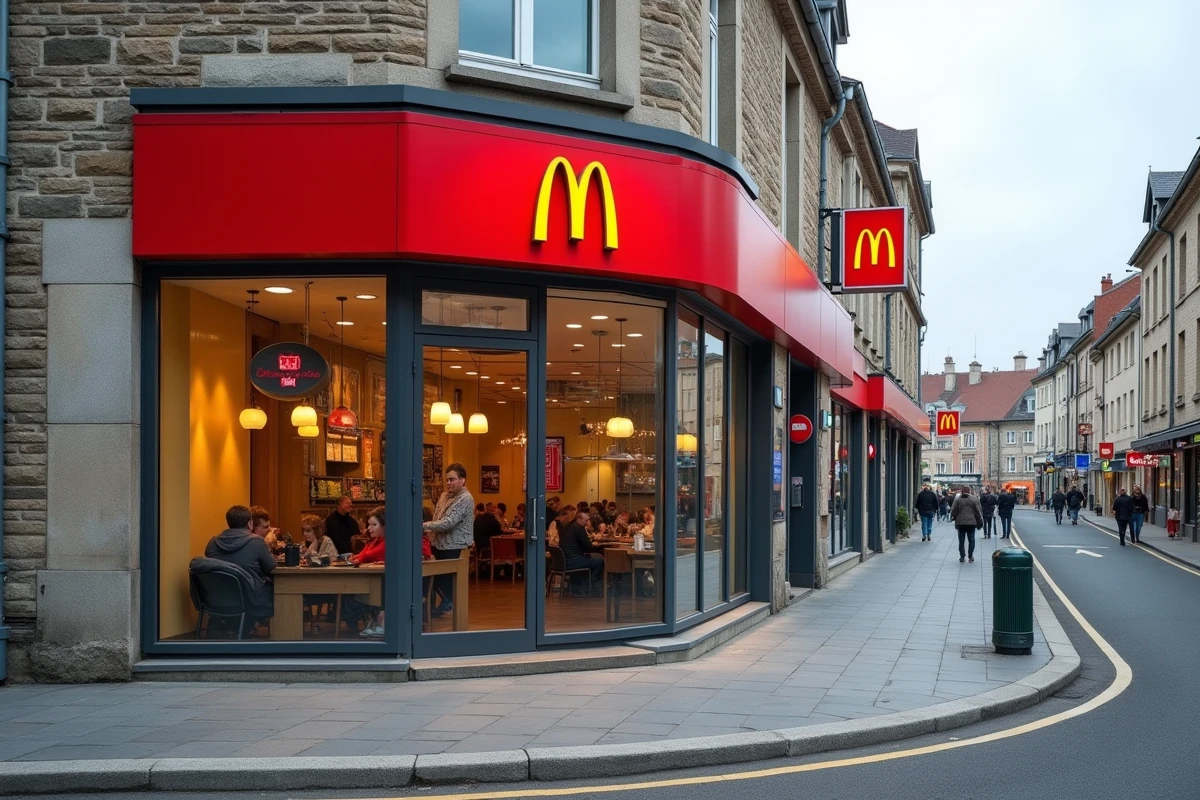
When you push open the door of a fast-food restaurant located in an old building, the contrast is striking even before you place your order. In Villefranche-sur-Saône, the McDonald’s in the Le Garet neighborhood plays on this dissonance: stone vaults, exposed beams, and standardized menus served under a ceiling that tells several centuries of local history.
Training and Safety: A McDonald’s Investing Beyond the Kitchen
What happens behind the scenes in a chain restaurant is rarely discussed. However, the establishment in Villefranche-sur-Saône has enlisted specialized providers to train its team in first aid and emergency fire intervention, using virtual reality modules.
This type of system, documented by the provider FormationVR, covers first aid procedures, the role of a first intervention fire team member, and the mastery of the on-site fire surveillance system. The immersive training in virtual reality changes the game for the staff, who handle evacuation or care scenarios without real risk.
For a restaurant welcoming the public in a heritage building, with old materials (stone, wood), the fire safety constraints are not the same as in a metal box in a commercial area. Feedback varies on the effectiveness of these short training sessions, but their very existence sets this establishment apart from the majority of fast-food outlets in medium-sized cities.
Delivery and Flow: The McDonald’s of Villefranche as a Preparation Hub
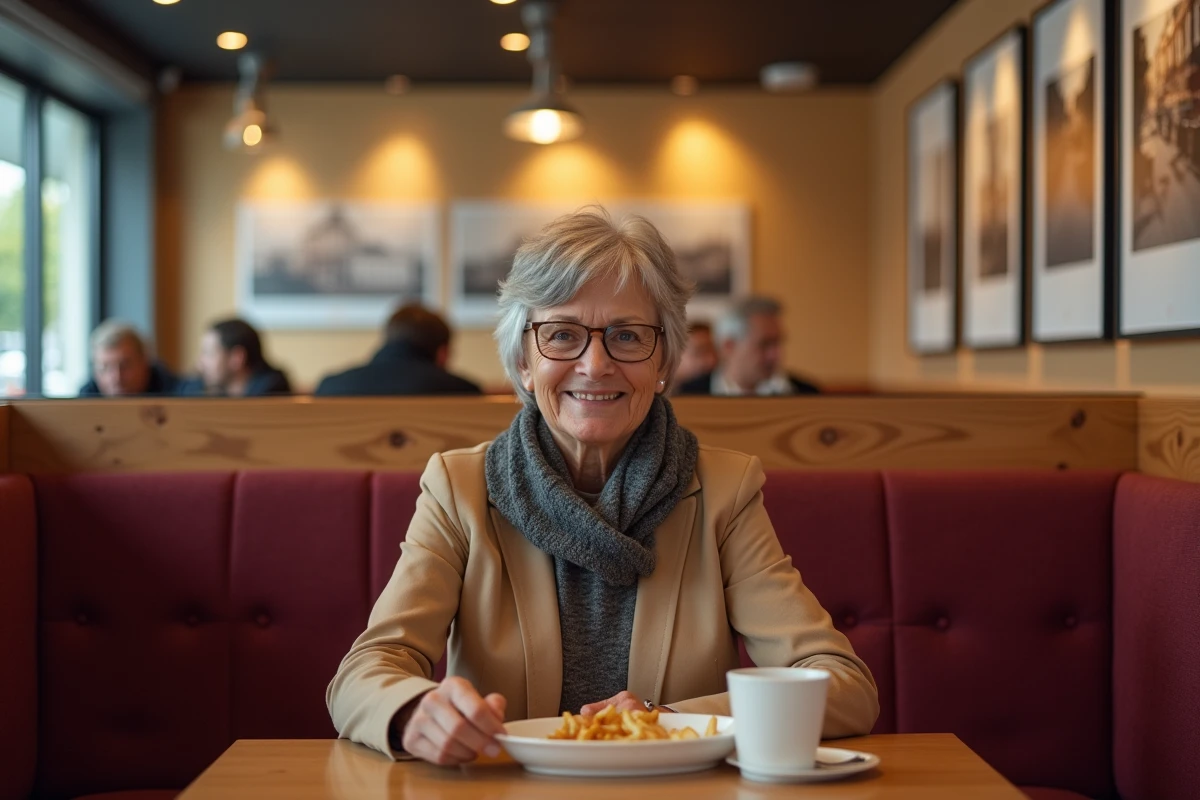
McDonald’s is often imagined as a place to sit down or go through the drive-thru. In Villefranche-sur-Saône, the McDonald’s of Villefranche-sur-Saône also operates as a preparation hub for delivery platforms, notably Uber Eats.
This dual role alters the internal organization. The staff simultaneously manages in-house orders at the counter and those intended for delivery drivers waiting at the entrance. During peak hours, the delivery flow can represent a significant portion of the activity, which changes the pace in the kitchen and the management of fresh stock.
For local residents, the impact is tangible: the presence of delivery riders on bicycles or scooters around the restaurant, frequent rotations, and sometimes duplicated queues. This is an aspect that occasional visitors may not necessarily perceive, but it structures the daily reality of the establishment.
Heritage Architecture and Operational Constraints in Villefranche-sur-Saône
Setting up a fast-food chain in a historic building is not just about placing tables under vaults. Accessibility standards, air extraction, and fire safety regulations impose heavy modifications, often invisible to the customer.
- Cooking fume extraction must pass through stone walls without degrading them, which requires suitable ducts and sometimes an agreement with the architects of historic buildings.
- Accessibility for people with reduced mobility in an old building requires ramps, passage widths, and compliant restrooms, where the original plans did not foresee such features.
- Brand signage (illuminated signs, totems) is often subject to restrictions in heritage city centers, limiting commercial visibility.
Operating a fast-food restaurant in an old building costs more than in a peripheral commercial area. Choosing such a location is part of a visibility and local anchoring strategy, not a logic of immediate profitability.
McDonald’s in Medium-Sized Cities: What Villefranche Says About a National Trend
Villefranche-sur-Saône is not an isolated case. According to an article from Pèlerin published in November 2025, McDonald’s is increasingly establishing itself in the heart of medium-sized towns and villages. The strategy no longer targets only peripheries and business zones.
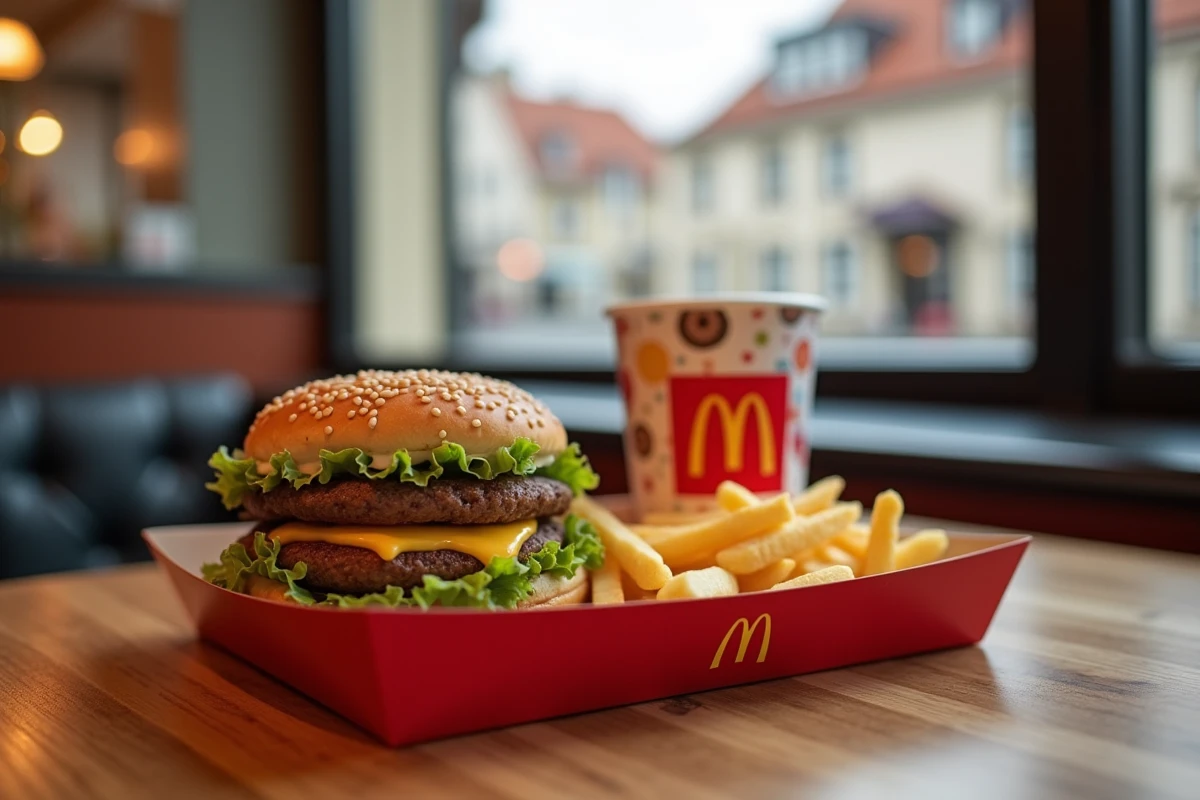
For a town like Villefranche, located in the heart of Beaujolais, this establishment in the city center creates a point of tension between commercial attractiveness and local identity. One can eat a Big Mac just steps away from wine cellars and Renaissance facades. The contrast provokes reactions, but it also attracts a clientele that would not travel to the outskirts.
What It Changes for the Local Commercial Fabric
A McDonald’s in the city center generates foot traffic. Nearby businesses sometimes benefit, particularly bakeries or newsstands that capture part of the pedestrian flow. In return, the presence of a global brand in a historic neighborhood can hinder the establishment of independent restaurateurs in adjacent locations, due to comparative effects on rents or foot traffic.
The balance between commercial dynamism and preservation of local character remains an open question in many medium-sized French towns. In Villefranche-sur-Saône, the Garet restaurant embodies this tension very concretely, between its old walls and standardized meal trays.
The McDonald’s in Villefranche-sur-Saône is not just another hamburger outlet. Its location in a heritage building, its role as a delivery hub, and the technical constraints it absorbs make it a case study for anyone interested in how major brands adapt to historic city centers.