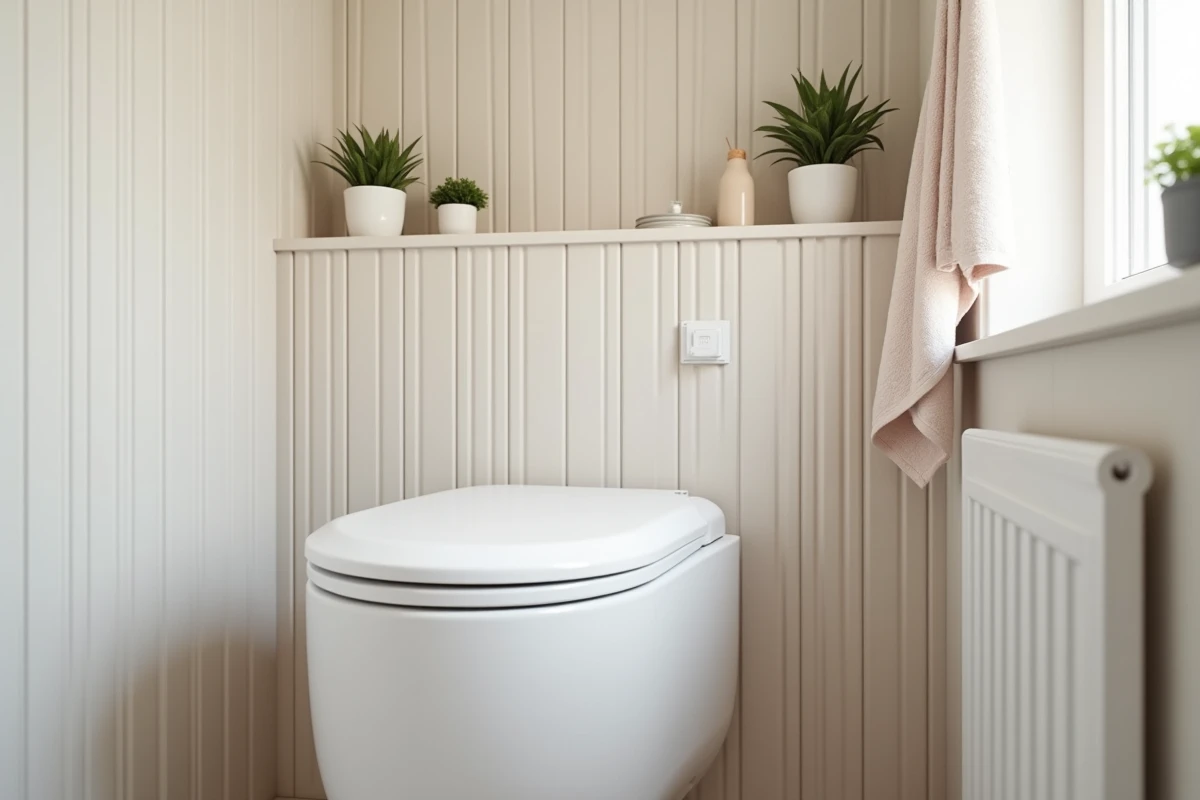
When you type “Ikea dry toilets” into a search engine, you expect to find a product listed in the catalog of the Swedish giant. The reality is different: Ikea does not sell any dry toilets. The question worth asking is less about the existence of a product than about what this search reveals about the real needs of individuals, and about the gap between a DIY setup using repurposed furniture and an installation designed for daily domestic use.
Dry toilets in primary residences: constraints that DIY does not solve
The majority of content around Ikea dry toilets focuses on repurposing chests or wooden benches to house a bucket. This DIY approach works for occasional use (garden shed, festival, weekend in a van). For use in a primary residence, the requirements change radically.
The first problem is the daily management of waste and odors. A twenty-liter bucket placed in a piece of furniture without ventilation or urine separation fills up in a few days for a household of two people. Emptying it becomes a frequent chore, and odors appear as soon as the sawdust/waste ratio is no longer respected.
The second point concerns waterproofing. An Ikea particle board piece of furniture is not designed to withstand prolonged humidity. With repeated contact with wet sawdust and splashes, the material swells and degrades within a few months. Specialized manufacturers use treated solid wood or rotomolded plastic precisely for this reason.
Those considering Ikea dry toilets for the home would benefit from understanding this gap between a DIY prototype and a system designed to last, before investing time and money in a setup that won’t hold up over time.
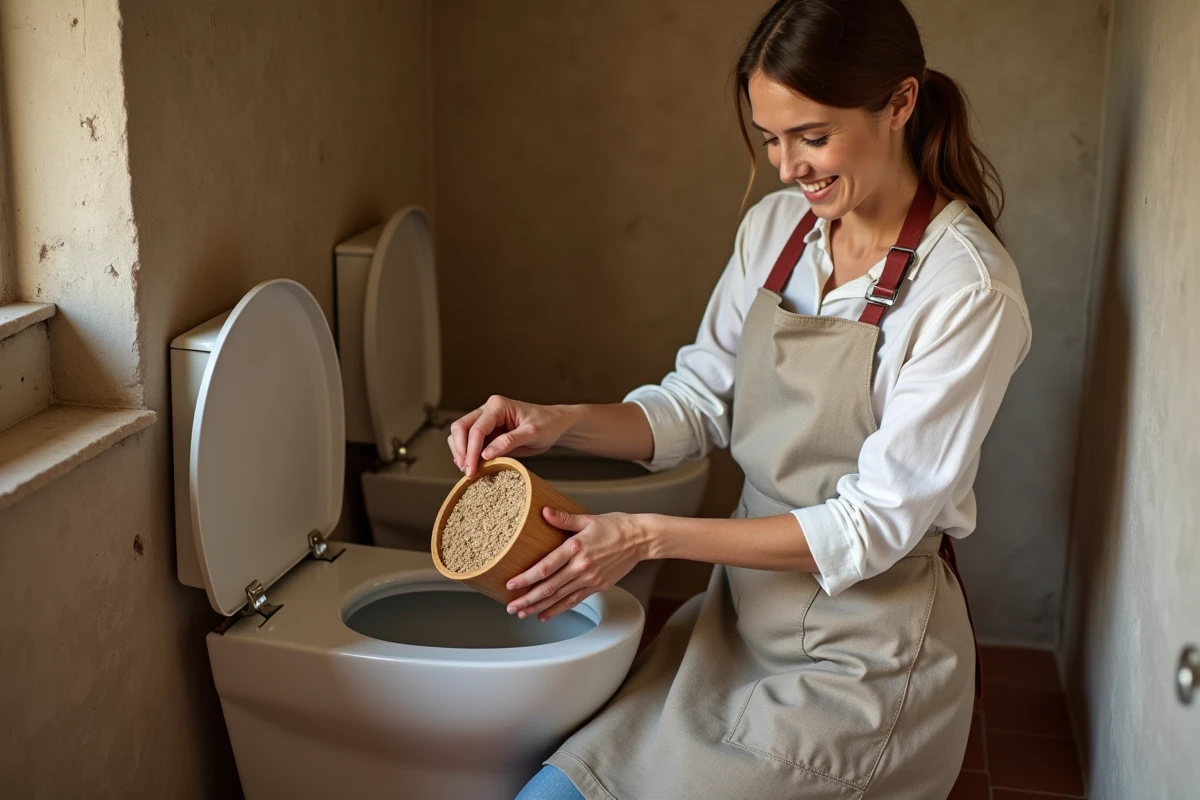
Dry toilets with or without urine separation: comparison table
The choice of system conditions everything else: frequency of emptying, odor management, necessary space. Here is a comparison of the two main families of dry toilets suitable for domestic use.
| Criterion | Litter Toilet (LT) | Urine Separation Toilet |
|---|---|---|
| Principle | Waste and urine mixed, covered with sawdust or shavings | Urine diverted to a separate tank, solid waste in a bin |
| Emptying frequency (household of 2) | Every 3 to 5 days | Solids: every 2 to 4 weeks – Urine: every 2 to 3 days |
| Odor management | Acceptable if the sawdust/waste ratio is respected | Significantly reduced thanks to separation |
| Installation complexity | Low (a bucket and a chest are sufficient) | Medium (requires a separator and sometimes ventilation) |
| Compatibility with Ikea DIY setup | Yes, for occasional use | Difficult without specialized parts (separator, pipes) |
| Suitable for primary residence | Restrictive on a daily basis | More viable in the long term |
The takeaway from this comparison is: urine separation drastically reduces the frequency of solid waste emptying. This is the factor that shifts a dry toilet from being an ecological curiosity to a sustainable domestic solution.
Why the separator changes everything
Urine represents the majority of the volume produced by an adult each day. When it mixes with solid waste, it accelerates anaerobic fermentation, the main source of bad odors. By diverting it, you obtain nearly odorless solid waste that dries quickly.
No standard Ikea furniture allows for the integration of a separator without significant modification. Commercial separators (made of plastic or stainless steel) cost between a few dozen and a hundred euros, and their geometry requires precise drilling of the seat. This is where the “100% Ikea” setup reaches its technical limit.
Choosing dry toilets for the home: often overlooked criteria
Beyond the type of system, three parameters determine whether a dry toilet will function daily in a home.
- Storage space for litter: wood shavings or chips occupy a significant volume. A household consumes several dozen liters of litter per month. Plan for a dry and accessible storage space, which DIY tutorials rarely mention.
- Composting point: the collected waste must be composted for a sufficient duration before any valorization. In urban housing without a garden, the absence of a composting point makes using a dry toilet complicated, if not impossible.
- Ventilation of the room: an extractor fan or natural ventilation in the room where the dry toilet is located limits odor rise. Specialized models often include a connection for low-energy ventilation, a difficult addition to improvise on a storage unit.
Occasional use, light housing, or primary residence
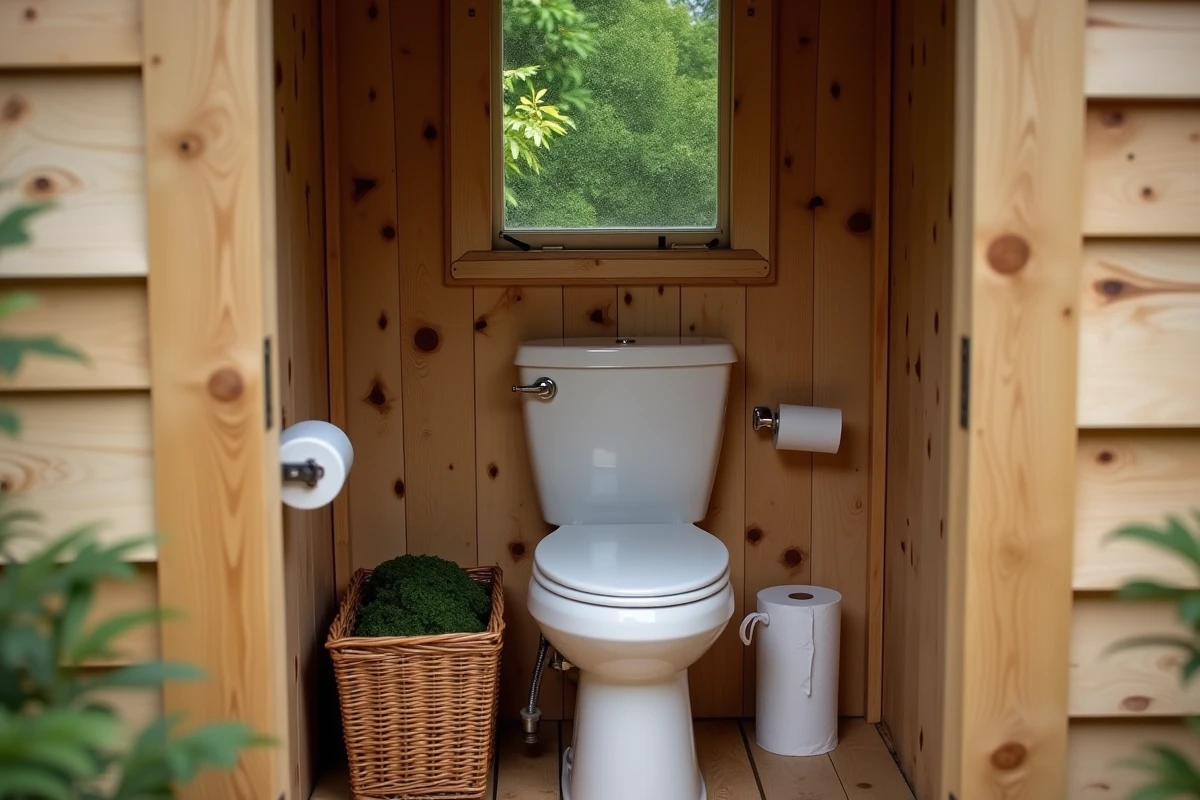
Feedback shows very different needs depending on the context. A dry toilet in a tiny house occupied by a single person does not pose the same constraints as in a family home of four connected to the sewer system.
For occasional use (secondary residence, garden workshop), a simple setup based on a bucket and chest may suffice. However, for a primary residence, a model with separation, ventilation, and durable materials is not a luxury but a condition for viability.
Real water savings from dry toilets in domestic use
The main argument for dry toilets remains water savings. A traditional flush uses between six and twelve liters of drinking water per use. For a household of two over a year, the volume saved amounts to thousands of liters.
This savings is real, but it must be weighed against the total cost of the system:
- Purchase of litter (sawdust, shavings) if there is no free source
- Time spent on emptying, cleaning, and composting
- Possible replacement of equipment (bucket, seals, separator) every few years
The water savings do not automatically translate into net financial savings, especially in urban areas where the price of water remains moderate and where sawdust must be purchased. The primary interest remains ecological: reducing pressure on drinking water resources and producing valuable compost.
Choosing a dry toilet for the home therefore relies less on the brand of a piece of furniture than on the suitability between the chosen system, the number of occupants, and the household’s actual capacity to manage the complete cycle, from litter to compost.