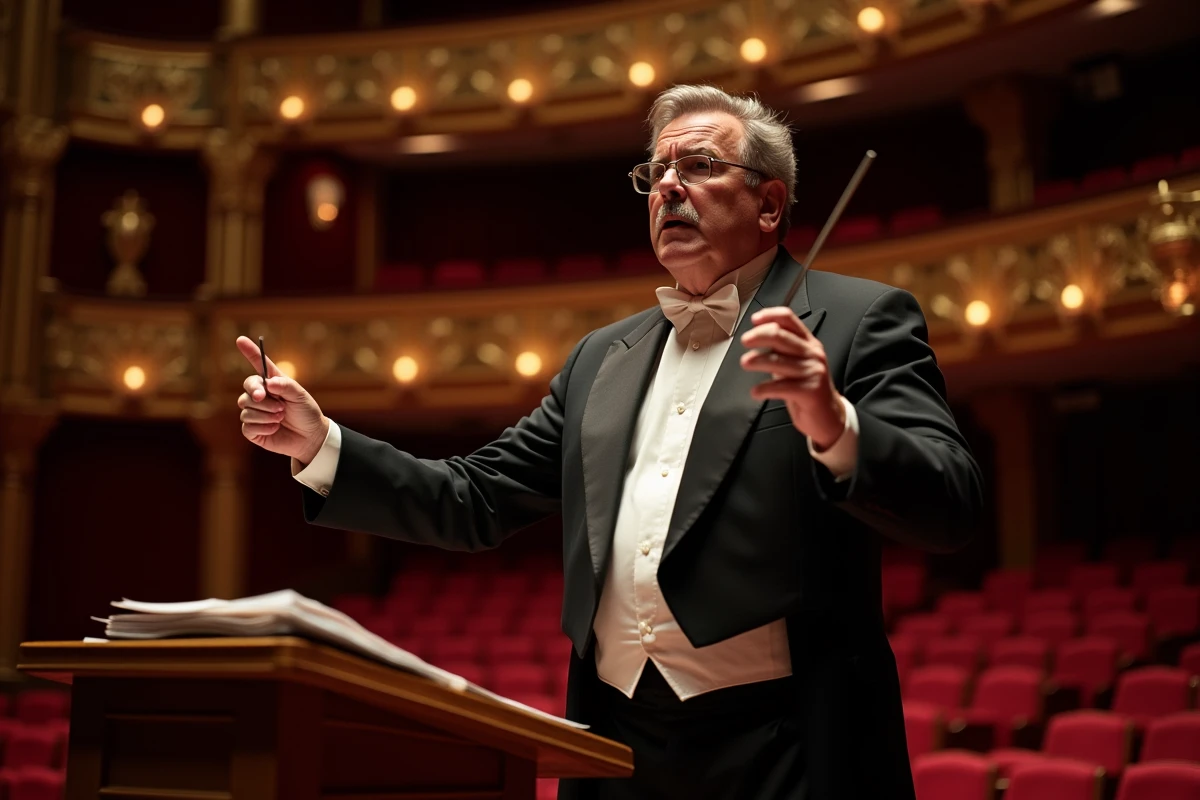
When programming a Verdi opera today, one does not just choose a score. One chooses a stage playground, a political framework to reactivate, characters whose psychology is encapsulated in a few arias of formidable density. It is this concrete dimension, that of the stage and dramaturgy, that makes the list of Verdi’s operas so rich to explore.
Staging Reinterpretations of Verdi: What Recent Productions Change
The current trend is no longer to present Verdi as a fixed monument. Contemporary directors delve into his librettos to extract tensions that the classical repertoire had sometimes smoothed over.
The programming of Don Carlo at Grange Park Opera in June 2026 illustrates this movement well. The production emphasizes the themes of power, politics, and human fragility, three threads that run through the libretto but which traditional productions often treated as mere historical backdrop. Here, the conflict between Philip II and his son becomes a lever to discuss authority and dissent, without forced transposition.
At the Royal Opera of Wallonia-Liège, Otello is featured in the June 2026 communication as a “last masterpiece.” The editorial interest shifts towards the end of Verdi’s career, where the interplay between dramatic spaces and the staging of inner tensions takes precedence over the spectacular.
This approach is found in the play Viva Verdi at the Théâtre Hébertot, which tells the composer’s story through the genesis of his operas. The hybrid format (biographical and musical) breaks the logic of the catalog to place each work in its context of creation.
To explore a complete list of Verdi’s operas with an analysis of each title, it is beneficial to intersect chronology and dramatic stakes rather than simply stacking premiere dates.

Verdi Operas to Know: Three Titles Where the Stage Reveals Everything
Rather than a survey of the thirty or so titles, let’s focus on three operas whose significance changes radically depending on how they are staged.
Rigoletto and the Trap of the Jester
Created at La Fenice in Venice, Rigoletto is based on a libretto by Francesco Maria Piave after Victor Hugo. The title role is a court jester, deformed and vengeful. On paper, it is a drama of the curse. On stage, everything depends on how the Duke’s violence is treated.
Recent productions tend to harden the character of the Duke of Mantua, whereas mid-20th century stagings portrayed him as a light seducer. This shift transforms the opera: Gilda is no longer just a sacrificial victim; she becomes the moral pivot of the work.
La Traviata: An Intimate Drama Under Social Pressure
La Traviata functions as a sentimental closed door disguised as a salon opera. Violetta Valéry, a Parisian courtesan, dies of tuberculosis and social conventions. What makes the work so adaptable is that each era projects its own idea of marginality onto it.
It is staged in contemporary settings, in hospitals, in apartments. Piave’s libretto holds up because the conflict between Violetta and Germont père is universal: who has the right to decide a woman’s respectability?
Nabucco and the Chorus as a Collective Character
Nabucco established Verdi’s reputation. The chorus “Va, pensiero” has become a symbol of the Italian Risorgimento, sung in the streets as a hymn to national unity. On stage, the question is whether to let this chorus be a moment of contemplation or to make it a political act.
Productions that choose the latter option place the audience in an active position. The chorus no longer sings “for” the exiled Hebrews; it directly addresses the audience.
Giuseppe Verdi and the Construction of a Dramatic Language
Verdi’s career is often divided into three periods, but this framework has its limits. What matters on the ground is how he gradually fused music and stage action.
- In his early operas (Oberto, Un giorno di regno), the writing remains close to the conventions of bel canto. The arias are separate numbers, and the orchestra accompanies more than it comments.
- From Rigoletto onwards, Verdi compresses the action. Scenes flow into one another, and the recitatives become fully-fledged dramatic moments. Piave’s libretto plays a crucial role in this evolution.
- With Otello and Falstaff, composed to librettos by Arrigo Boito, the boundary between aria and recitative almost completely disappears. The orchestra carries the drama as much as the voices.
This trajectory explains why current directors are so interested in the late works. Otello offers a dramatic continuity that allows for staging choices that are impossible in a number opera.
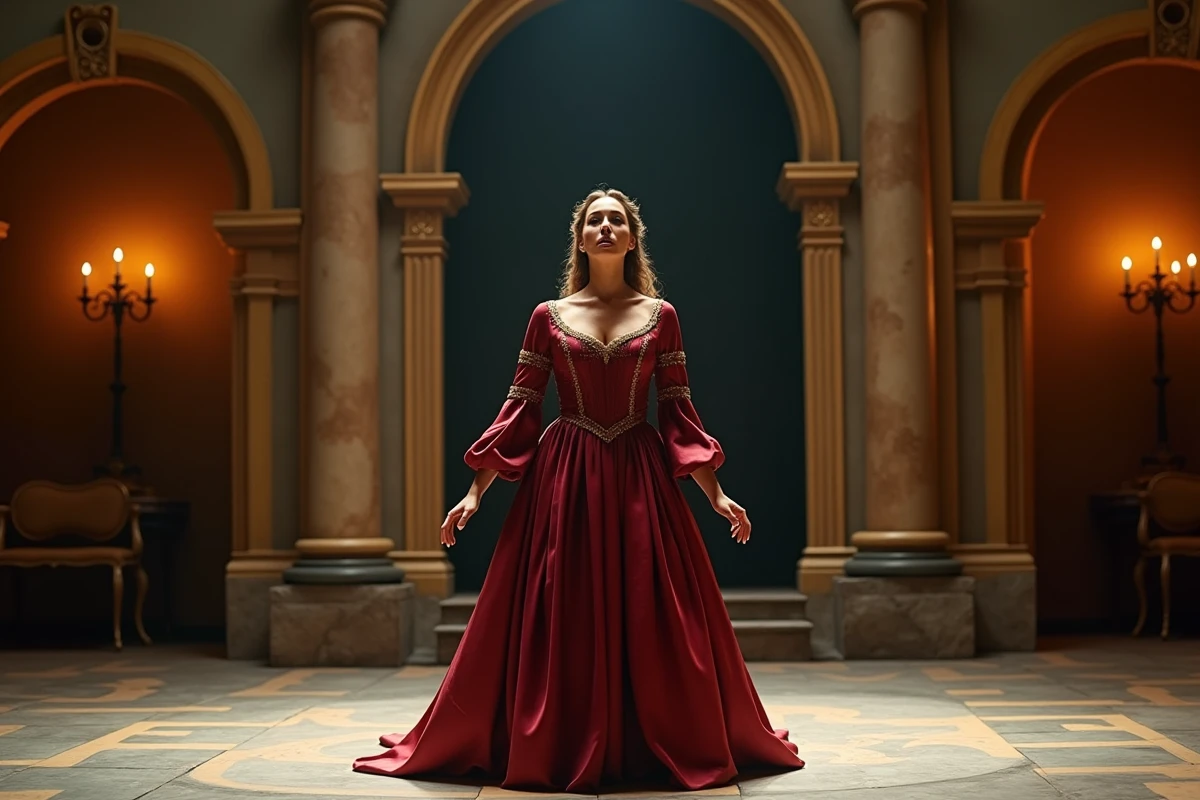
Verdi in Milan, Venice, Paris: The Role of Venues in the Work
One cannot separate Verdi’s operas from the venues where they were created. La Fenice in Venice hosted the premieres of Rigoletto, La Traviata, and other titles. La Scala in Milan was the theater for Nabucco and Otello. The Opéra de Paris commissioned Les Vêpres siciliennes and Don Carlos in its French version.
Each venue imposed constraints: duration, number of acts, presence or absence of a ballet (mandatory in Paris). These constraints directly shaped the structure of the operas. Don Carlos exists in a five-act French version and a four-act Italian version, and the two do not tell exactly the same story.
Reactions vary on this point, but several musicologists believe that the tighter Italian version gains in tension what it loses in historical context. For a director, the choice of version determines the rest of the work.
Verdi composed for different audiences, in different languages, under different censorship regimes. Nabucco had to contend with the Austrian authorities, Un bal masqué underwent modifications imposed by Neapolitan censorship. These pressures did not weaken the works; they made them denser, more coded, more able to express between the lines what the stage could not openly show.