
The immobilizer light flashing on the dashboard, the engine refusing to turn over despite a fully charged battery: on a Clio 2, this scenario almost always points to the electronic immobilization system. Before replacing anything, it’s essential to know where the components of the immobilizer unit are located on the Clio 2, and especially which one is actually at fault.
Phase 1 or phase 2: the name of the module changes depending on the year of the Clio 2
You don’t look for the same part depending on whether the Clio 2 was manufactured before or after 2001. On the older models (phase 1, produced between 1998 and 2001), the system relies on a decoder unit located near the fuse box, on the driver’s side, under the dashboard. This module is sometimes referred to as the “immobilizer decoder” in Renault documentation.
On the newer versions (phase 2), this function is integrated into the UCH (Central Body Unit). The UCH manages the lighting, windshield wipers, and starting authorization. It is located in the same spot, under the steering column, but its replacement involves more extensive reprogramming since it consolidates more functions.
Before disassembling anything, it’s important to note the exact year of the vehicle and the mention “phase 1” or “phase 2” on the registration document or the manufacturer’s plate in the engine compartment. This step prevents ordering an incompatible module or searching for a unit that doesn’t exist in this form on our version. A detailed guide allows you to find the immobilizer unit on Clio 2 taking these variations into account.
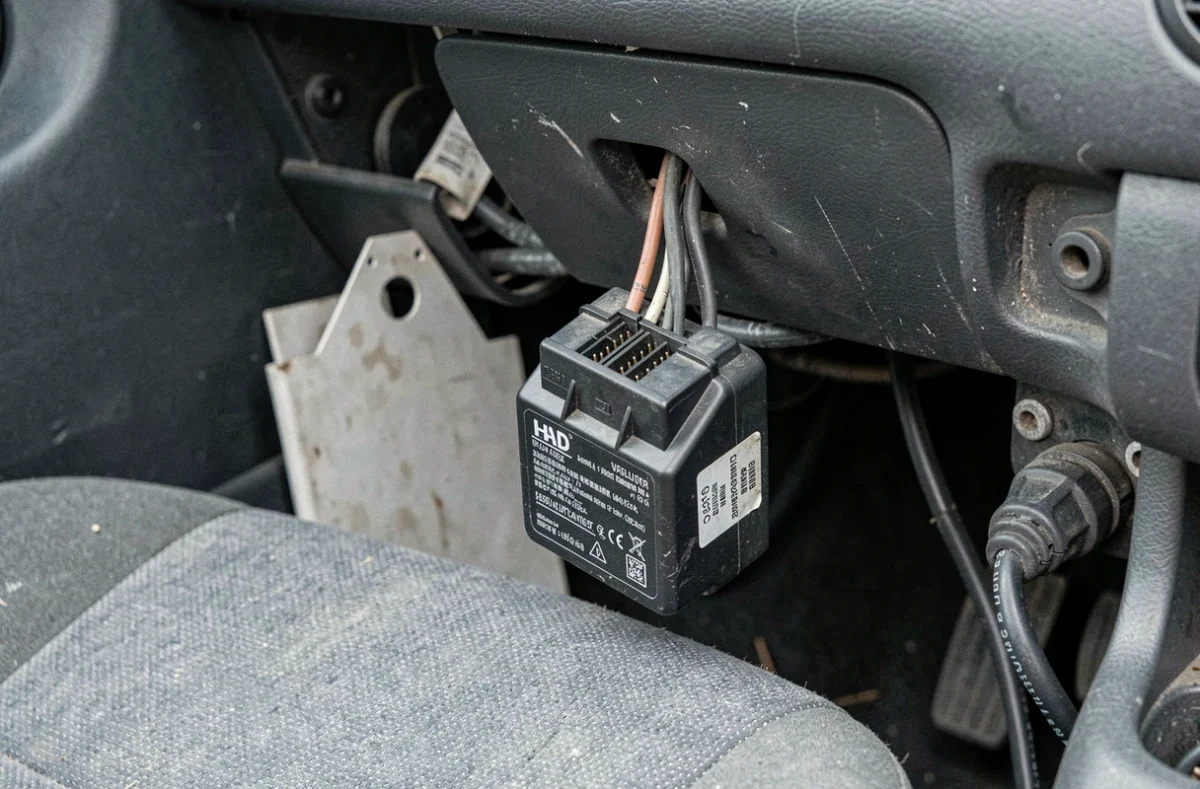
Accessing the UCH and decoder under the dashboard
In both phases, the work area remains the same: under the steering wheel, on the left side. Start by removing the lower dashboard cover, secured by Torx screws or plastic clips depending on the trim level.
Visually locating the module
The decoder unit (phase 1) is a small rectangular module, often black, connected by a multi-pin connector. It is located very close to the cabin fuse holder. On phase 2, the UCH is bulkier and usually has a Renault label with a reference number. It is secured by retaining tabs or a metal slide.
Do not confuse the UCH with the engine control unit, which is located in the engine compartment, on the passenger side, often protected by a plastic cover. The engine control unit is part of the immobilizer system (it receives the authorization signal), but it is not the first thing to check during a cabin diagnosis.
Disconnecting the connector safely
Before handling the module, disconnect the negative terminal of the battery and wait about ten minutes. This precaution protects the onboard electronics from voltage spikes. The connector of the unit can be unclipped by pressing on a tab, without forcing it. If the tab breaks (common with aged plastics), the electrical contact becomes intermittent and can itself cause starting issues.
Transponder ring around the ignition switch: the often-forgotten component
The UCH or decoder does not operate alone. The reading ring (or transponder antenna) surrounds the ignition barrel, where the key is inserted. Its role is to capture the passive signal emitted by the chip embedded in the key. Without this communication, the module refuses to authorize fuel injection.
This ring is practically invisible from the outside. It can be located by removing the steering column cover (two half-shells secured by cross-head screws). It appears as a plastic ring with a small wire connector that connects to the main unit.
A fault in the ring or its wiring perfectly mimics a failure of the unit. If the immobilizer light remains steadily on or flashes while the key is in the ignition position, the problem often lies with this antenna rather than the module itself. Checking the continuity of the cable between the ring and the unit connector allows for a quick elimination of this hypothesis.
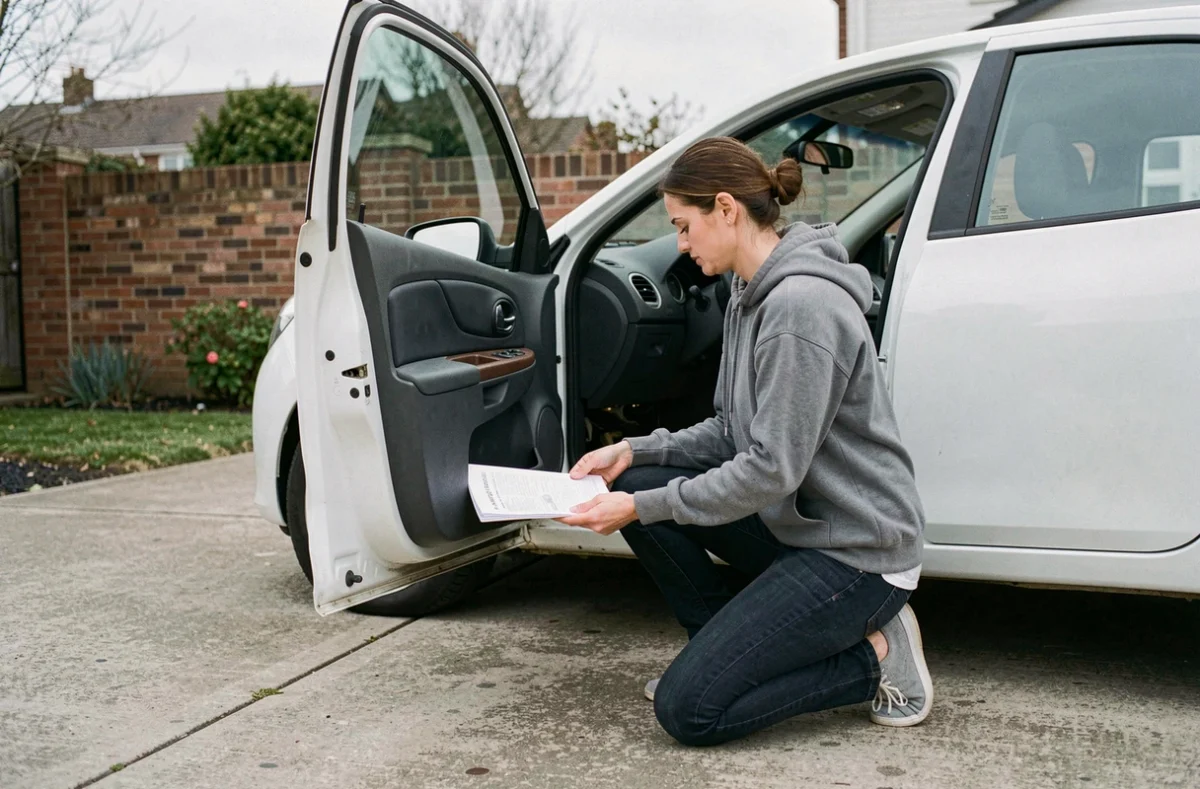
Clio 2 immobilizer diagnosis: distinguishing true faults from poor connections
The common reflex is to blame the unit as soon as the engine won’t start. In practice, several elements deserve checking before concluding:
- The key itself: the transponder is a passive component powered by the magnetic field of the ring. If the chip is damaged (shock, moisture), the signal is no longer emitted. Testing with the second key provided at the purchase of the vehicle is the first step to take.
- The remote control battery: it only powers the remote locking function and not the immobilizer transponder. A “dead” remote does not prevent starting if the transponder is functioning. Confusing the two delays the diagnosis.
- Oxidized connectors: on a vehicle of this age, the terminals and connectors in the under-steering area accumulate dust and moisture. Cleaning with contact spray on the pins of the unit and the ring sometimes resolves the issue without needing to replace parts.
- The stored fault code: a diagnostic tool plugged into the OBD port allows reading codes related to the immobilizer. Without this tool, one proceeds blindly.
The synchronization between the key, the ring, the unit, and the engine control unit forms a chain. Each link must be checked in order before considering replacing the module, which requires reprogramming with professional equipment or a visit to Renault.
On a Clio 2 phase 1, the presence of a dedicated decoder connector simplifies the intervention compared to phase 2 where the UCH consolidates all functions. In both cases, a methodical diagnosis, from the simplest component (the key) to the most complex (the engine control unit), remains the only approach that avoids unnecessarily replacing an expensive part.