Adopting simple habits to improve your health every day starts with measuring what really affects your body. A study published in June 2024 and reported by the World Health Organization shows that the proportion of adults who are not active enough increased between 2010 and 2022.
The problem is not just a lack of exercise: time spent sitting, sleep quality and stress management, taken together, widen the gap between a health-protective routine and one that puts you at risk.
Sedentary work and health: what the data shows
Most articles about healthy habits recommend “getting 30 minutes of exercise a day.” This advice overlooks a more significant factor for people who work sitting down: how long they remain still at a stretch. The WHO links high levels of sedentary behaviour to adverse health risks in adults, regardless of how much physical activity they do otherwise.
The table below compares two typical profiles to show how spreading movement throughout the day changes risk exposure.
| Criterion | Profile A: typically sedentary | Profile B: incorporates micro-movements |
|---|---|---|
| Uninterrupted sitting time | More than 3 hours at a stretch | Broken up every 45 minutes |
| Type of physical activity | One session in the evening (running, gym) | Short walks, taking the stairs, stretching |
| Effect on cardiovascular risk | Partly offset by the exercise session | More consistent reduction in blood pressure |
| Feasibility for people with a disability or chronic illness | Depends on the ability to sustain prolonged exertion | Adaptable: seated movements, standing breaks |
| Impact on sleep | Varies depending on the time of the session | Gradual regulation of the circadian rhythm |
WHO data point in the same direction: all physical activity counts, including everyday movements. Walking a short distance, taking the stairs or standing up regularly reduces sedentary time without requiring a dedicated block of time. Resources such as https://optimumsante.fr bring together approaches suited to these everyday constraints.

A health routine adapted to physical limitations: disability, chronic illness and pregnancy
WHO recommendations explicitly cover older adults, pregnant and postpartum women, and people living with a chronic illness or disability. A helpful habit is therefore not the same for everyone: it should be tailored to each person’s actual abilities.
Telling someone who uses a wheelchair to “get 10,000 steps” or someone undergoing intensive treatment to “run three times a week” excludes these groups from the conversation about health. The goal is to identify accessible activities.
- For someone with limited mobility: seated arm-strengthening exercises, upper-body stretches and deep abdominal breathing to manage stress
- For a pregnant or postpartum woman: walking at a moderate pace, pelvic floor exercises and frequent standing breaks instead of an intense workout
- For someone with a chronic illness (diabetes, heart condition): breaking activity into short sessions, monitoring fatigue and consulting their doctor to set an appropriate exertion threshold
Regular physical activity also benefits mental health, cognitive function and sleep, according to the WHO. Focusing on exercise solely as a way to manage weight overlooks these wide-ranging effects.
Diet and sleep: two interconnected factors
Diet and sleep are often treated as separate topics. In practice, they affect each other. A heavy evening meal can disrupt falling asleep. Too little sleep increases cravings for fatty and sugary foods the next day, creating a gradual downward spiral.
Going to bed and getting up at consistent times regulates the circadian rhythm more effectively than extending total sleep time inconsistently. Exposure to natural light in the morning helps reinforce this hormonal rhythm.
When it comes to diet, the most measurable change is to add rather than restrict. Adding a vegetable to each meal, drinking a glass of water between coffees or having a handful of dried fruit as a snack can produce noticeable improvements in digestion and energy after a few weeks, without requiring a complete overhaul of your diet.
Everyday stress and mental health: realistic habits for busy days
Stress management features on every list of healthy habits. The challenge is not knowing that you should “stress less,” but finding activities that fit into a busy workday.
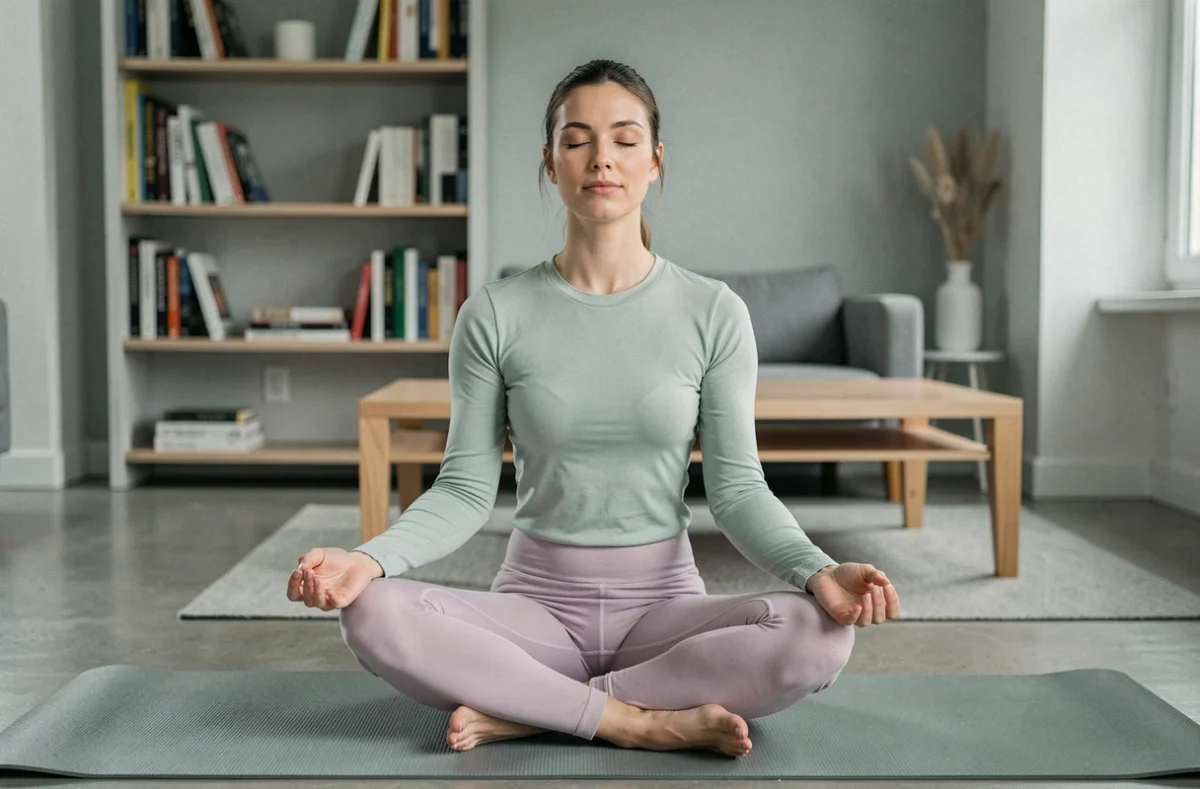
Five minutes of slow breathing between meetings can lower your heart rate and perceived tension. This kind of micro-practice requires no equipment, space or special skills. Other options can be built into your day:
- Walk outside during your lunch break, even for ten minutes, to take a break from screens and artificial light
- Check notifications only at set times to reduce the constant demands on your attention
- Stay in regular contact with others, even briefly: a phone call, a shared lunch or an informal conversation at the office
Social connection protects mental health just as physical activity protects the body. Prolonged isolation and sedentary behaviour have comparable effects on the risk of chronic disease.
Adopting healthy habits every day is not about following a one-size-fits-all list. Recent WHO data confirm that activity spread throughout the day and adapted to each person’s abilities can reduce risks just as much as a structured programme. What determines whether a routine succeeds is not its intensity, but its consistency and how well it fits the real-life constraints of the person following it.