When thinking of the most extreme explorations of our planet, the South Pole certainly ranks high on the list. This remote and icy region has fascinated people for centuries, but why does it remain so difficult for humans to access?
The Extreme Climate Conditions
The main obstacle to exploring the South Pole lies in the relentless climate conditions that prevail in this region. With temperatures dropping as low as -80°C, frequent snowstorms, and violent winds, it is extremely difficult for humans to survive in these hostile conditions. Additionally, the South Pole is covered by a thick layer of ice that makes progress difficult, if not impossible.
- Freezing Temperatures: The extremely low temperatures at the South Pole make any exploration dangerous for humans, even when equipped with appropriate clothing and gear.
- Snowstorms: Snowstorms can reduce visibility to zero and make navigation impossible, putting the lives of explorers at risk.
- Ice Layer: The ice covering the South Pole can be several kilometers thick, greatly complicating any land or air movement.
In the face of these extreme conditions, it is therefore very difficult, if not impossible, for humans to reach the South Pole without putting their lives in danger.
The Logistical Challenges
In addition to the extreme climate conditions, exploring the South Pole also presents numerous logistical challenges. Indeed, this isolated and remote region, far from any civilization, is difficult to access and requires meticulous organization to ensure the safety and survival of explorers. Furthermore, the resources needed for such an expedition (food, water, medical supplies, etc.) must be transported over long distances, making the endeavor even more complex.
- Isolation: The South Pole is one of the most isolated regions on the planet, complicating rescue operations in case of emergencies.
- Supply: The resources needed for an expedition to the South Pole must be transported over long distances, requiring complex and costly logistics.
In light of these logistical challenges, it is clear that exploring the South Pole remains an insurmountable challenge for most humans.
Environmental Protection
Finally, another aspect to consider in the exploration of the South Pole is environmental protection. Due to its fragility and importance for the ecological balance of the planet, the South Pole is subject to strict regulations aimed at preserving its biodiversity and unique ecosystems. Any expedition to the South Pole must therefore comply with these strict rules, making the organization of such an endeavor even more complex.
- Biodiversity Preservation: The South Pole is home to unique animal and plant species that must be protected from any human disturbance.
- Environmental Impact: Any expedition to the South Pole has an impact on the environment, whether it be pollution generated by vehicles or disturbance of fragile ecosystems.
In light of these environmental issues, it is crucial to consider nature protection in any attempt to explore the South Pole.
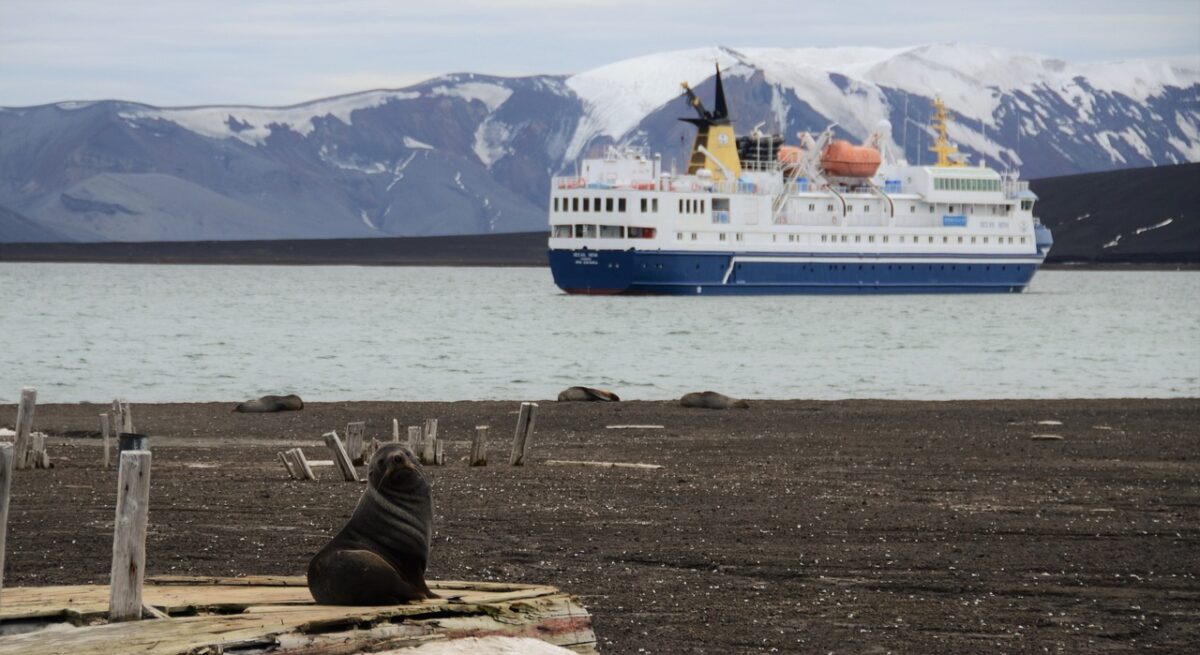
Exploring the South Pole remains a challenge due to extreme climate conditions, logistical challenges, and environmental protection. However, it is entirely possible to consider an Antarctic cruise to see its landscapes safely.